

🏆 Friendship Champions Leaderboard
🏆 Global Leaderboard
👀 Tap "View Full Rankings" below to see every quiz creator and their links!
Ready to top the charts?
🔥 CREATE MY QUIZ NOWShort answer first, since you probably just want to know: the Friendship Champions Leaderboard on BestieQuiz ranks quizzes by how many people have played them recently, not by who scored highest. If you've ever taken a friend quiz and immediately screenshotted your score to send to your group chat, you already get the appeal of a leaderboard. There's something oddly satisfying about seeing your name next to a little medal emoji, even if it's just for a bestie quiz.
I've spent a fair bit of time digging into how this system actually works, and once you see the logic behind it, the whole thing makes a lot more sense. Think of it less as a scoreboard and more as a popularity engine, one that rewards friend quizzes people actually want to share with each other. Let's walk through how it's built, what the numbers mean, and what you can do if you want your own best friend quiz to land on the world leaderboard.
📚 Table of Contents
What Is the Friendship Leaderboard?
You'll find the leaderboard right on the BestieQuiz homepage. It highlights a top-3 podium (🥇🥈🥉), showing each creator's total attempts and their average score out of 15. Below the podium sits a World Rankings preview table with four columns: rank, creator, average score, and total plays. Click "View Full Rankings," and you get the complete list, loading 50 results at a time as you scroll.
Every creator's name in that list is clickable, and it links straight to their quiz. People browse it as much to find new friend quizzes to try as to check bragging rights.
How Scoring Works
This is the part most visitors get wrong, so let's clear it up directly.
Total Plays Decide Your Rank, Not Your Score
The system ranks quizzes by total attempts first. Average score only steps in as a tiebreaker, and only when two quizzes land on the exact same number of plays. That means a quiz with more players almost always beats a quiz with a higher average, even if the higher-average quiz is objectively "better" or harder.
Here's a simple example that shows the logic clearly:
| Quiz | Total Attempts | Average Score | Final Rank |
|---|---|---|---|
| Quiz A | 8 | 7.3/15 | 1st 🥇 |
| Quiz B | 6 | 8.7/15 | 2nd 🥈 |
| Quiz C | 6 | 8.3/15 | 3rd 🥉 |
Notice Quiz B has the better average score, and it still ranks below Quiz A. Attempts win. Quiz B only edges out Quiz C because, with equal attempts, the higher average breaks the tie. Volume beats difficulty, every time, unless two quizzes are dead even on plays.
The Ranking Window Is Short
Rankings pull from roughly the last three days of activity, not all-time totals. That's why the leaderboard is marked "LIVE" and refreshes so often—it's meant to reflect what's popular right now, not quizzes that went viral six months ago and never got played again. A brand-new quiz can jump to #1 within a day or two if enough people share it, and an old quiz that isn't getting fresh plays will drop off fast, no matter how good its all-time numbers were.
Meet This Week's Top Quiz Creators
Picture two creators. One built a detailed, 20-question bestie quiz with intricate scoring categories. The other built a quick 8-question quiz asking "would your best friend know this about you?" and posted it straight into a group chat. In my experience watching these boards, the second creator wins almost every time.
That's because short, easy-to-finish quizzes get completed and reshared far more often than long ones. What surprises me is how consistently this pattern holds. It's rarely the most polished quiz that tops the board. It's the one that's easiest to send to a friend and finish in under two minutes.
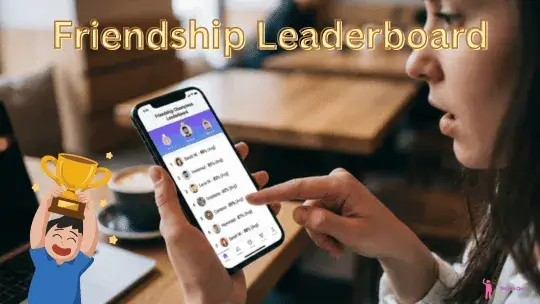
Global Friendship Leaderboard Concept
How to Climb the Leaderboard
If you're building a bestie quiz and want a shot at the top 3, a few things genuinely help:
- Keep it short. Long quizzes lose players halfway through; short ones get finished and passed along.
- Make it about the friendship, not just the quiz-taker. Questions that reference inside jokes or shared memories encourage people to send it to a specific friend.
- Post it where your friend group already hangs out. Group chats and close-friends stories tend to generate quick bursts of attempts, which is exactly what the leaderboard rewards in its 3-day window.
- Don't obsess over a perfect average score. As we covered, it's attempts that move the needle first. Score only matters if you're tied.
Because the system prioritizes volume, it can technically be nudged by asking a big group to rapid-fire tap through a quiz. That said, the ranking naturally self-corrects over time since the 3-day window keeps refreshing, so a single artificial burst won't hold a spot for long.
Full Rankings Explained
Scroll past the podium and you'll reach the Full Rankings table: rank number, creator name (linked directly to their quiz), average score, and play count, all loading in batches of 50 as you scroll or click through pages.
The leaderboard pulls quizzes from across BestieQuiz's full network, spanning multiple regions and languages, not just one version of the site. The "world" in World Rankings is fairly literal.
Why Bestie Quizzes Are So Easy to Share
Part of why leaderboards like this work so well is that friend quizzes and best friend dares tap into something people already enjoy: a low-stakes way to compare notes with someone close to them. A bestie quiz isn't really testing knowledge. It's testing closeness, memory, and a bit of humor. That's a pretty different emotional hook than most online quizzes, and it's probably why they get shared so much more readily than, say, a trivia quiz would.
❓ Frequently Asked Questions (FAQs)
It updates continuously. Rankings run on a rolling 3-day window instead of a fixed weekly reset, so new attempts can shift the board at any point during the day.
No, and this trips people up constantly. Rank is decided by total attempts first. Average score only settles ties between quizzes with an identical number of plays.
Yes. Click "View Full Rankings" to open the complete World Rankings table, which loads more results in batches as you scroll or page through.
Yes. Results pull from BestieQuiz's full network rather than one region or language version, which is why it's labeled a world leaderboard.
Create a friend quiz or best friend dare, then share it directly with your group. More attempts within a few days significantly improves your position.
To a small degree, since attempts drive rank. But because the ranking window refreshes every three days, an artificial burst of plays won't hold a top spot for long without real, ongoing sharing.
Final Thoughts
Once you understand that the Friendship Champions Leaderboard rewards attempts over perfect scores, the whole system starts to make sense. It surfaces the quizzes people are actually sending to their friends this week, not the hardest one to ace. If you're building a bestie quiz of your own, build something worth sharing and keep it short. The ranking follows from there.